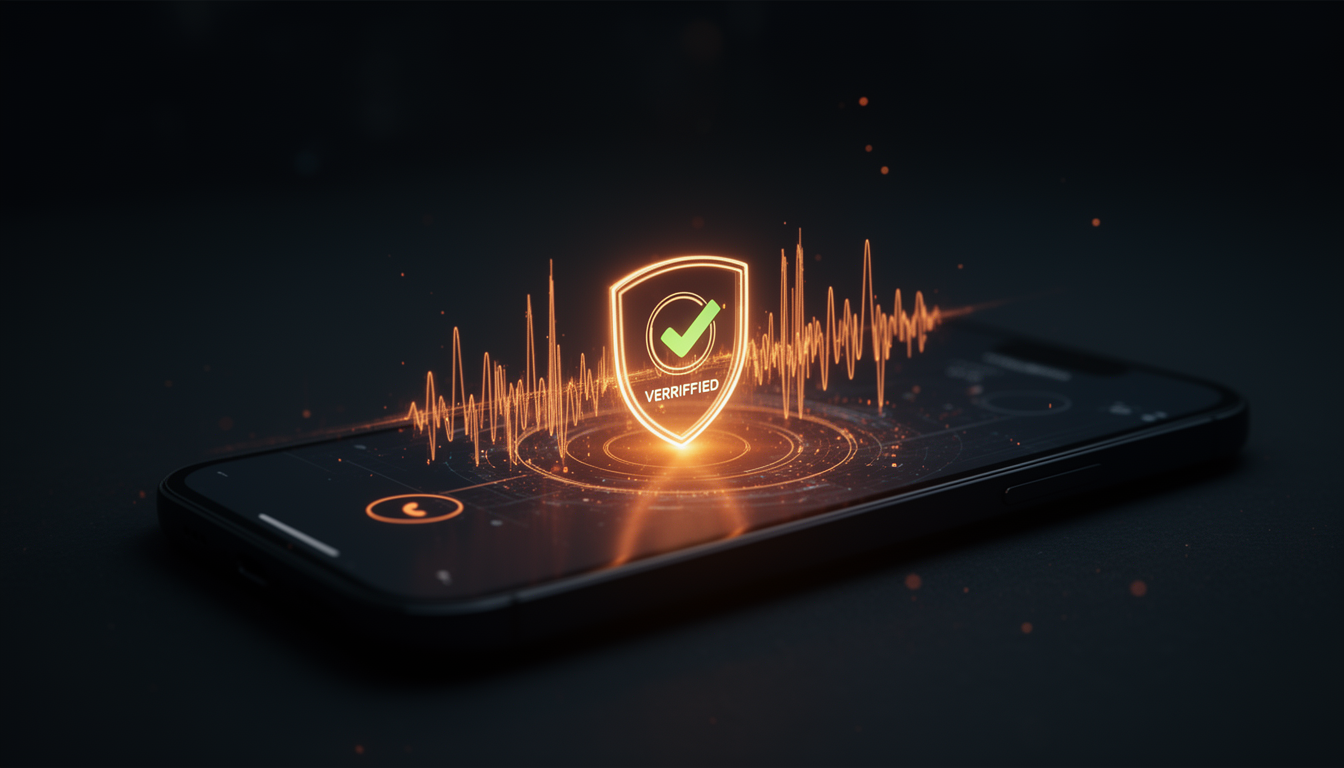
The voice on the phone can be faked. Why verified, encrypted calls matter now.
For a hundred years, hearing a familiar voice was proof enough. A few seconds of audio and a cheap AI model have quietly ended that.
Why a normal call is no longer safe
A voice can be cloned from seconds of audio. A short clip from a voicemail, a video or a webinar is enough to make a convincing copy of someone you trust.
Caller ID can be faked. The number on your screen is not proof of who is calling. Scammers routinely show your bank's real number while being someone else entirely.
Normal calls are not end-to-end encrypted. Ordinary phone and meeting systems were built to connect people, not to keep the conversation private or to prove who is really in it.
Meetings are a target too. Deepfaked faces and voices have been used in video calls to authorise transfers and approvals that never came from the real person.
What protection looks like
ProtectMyCalls and ProtectMyConference are the same system, built for a world where identity has to be proven, not assumed.
You only connect with verified contacts: both sides confirm each other first, so nobody can pretend to be someone else. Every call, chat and meeting is end-to-end encrypted, so no server, ours included, can listen. There is no phone number and no account trail, so there is nothing to spoof and nothing to leak. You always know exactly who is on the line.
Private, verified calls and meetings. You always know who is really on the line.